Feeding Milestones
What feeding development looks like and when to look closerEvery child develops at their own pace. But feeding skills do follow general patterns. These milestones can help you understand what typically happens as babies and young children learn to eat.
If your child isn’t hitting these exactly on time, don’t panic but use this as a guide to know when extra support might help.

Eating Is a Developmental Skill
Eating isn’t just about hunger. It involves:
Muscle strength
Coordination
Sensory processing
Posture
Motor planning
Experience
Like walking or talking, feeding skills build step by step.
Birth – 4 Months

Focus: Reflexive feeding
We expect that babies:
Suck and swallow reflexively
Feed from breast or bottle
Show hunger and fullness cues
Begin to tolerate being held in feeding positions
Watch for:
Frequent coughing or choking
Trouble coordinating sucking and breathing
Poor weight gain
Very long or very short feeds
Gasping for air
These can be signs a feeding specialist should take a look.
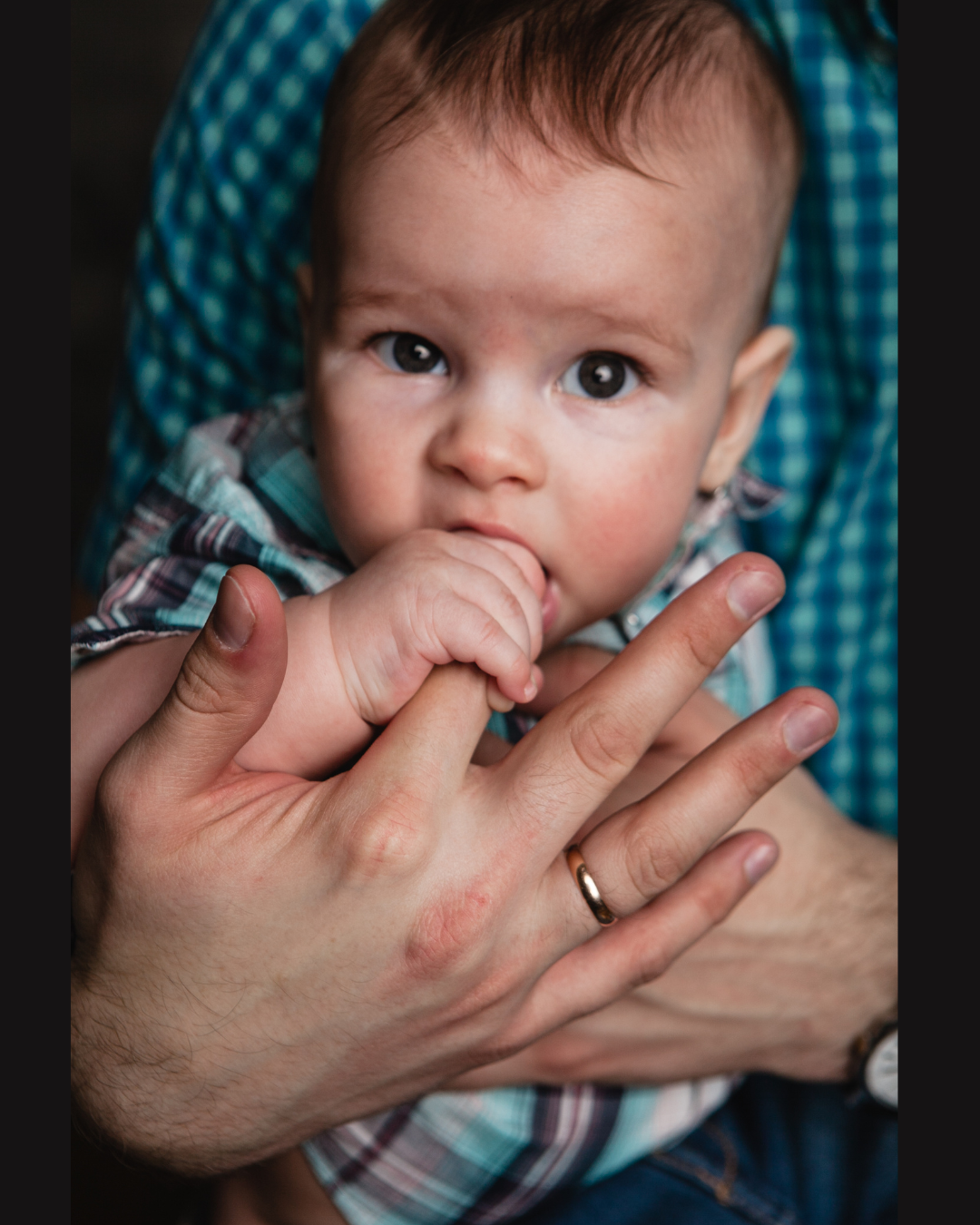
Focus: Early oral exploration
We expect babies to:
Bring hands and toys to mouth
Show interest in watching others eat
Sit with support
Begin showing readiness for purées
Readiness signs for solids include:
Good head control
Sitting with support
Loss of tongue-thrust reflex
Interest in food
4 – 6 Months
6 – 9 Months
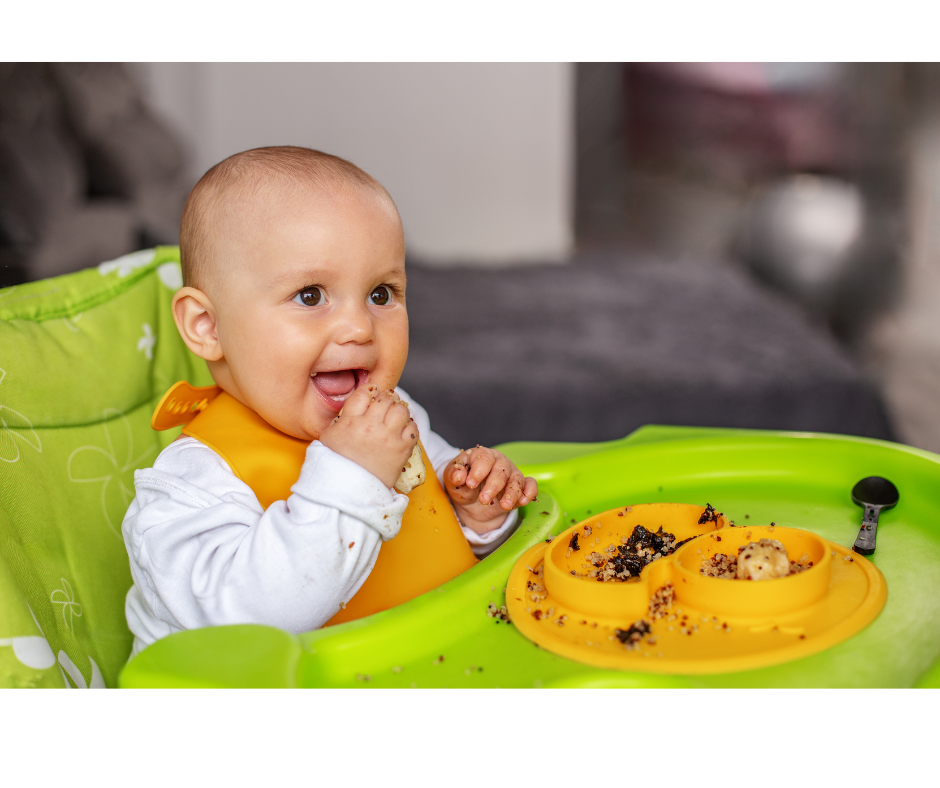
Focus: Learning to move food in the mouth
We want to see:
Eating purées and mashed foods with enthusiam. They don’t need to be consuming a high quantity, but they should be interested, excited, curious, and very exploratory
If baby lead weaning, we want to see a similar enthusiam in solid foods. We also want to see them bring the easy to hold foods to their mouth for exploration and tasting
Start picking up dissolvable solids from their tray or table. Yogurt melts, puffs, even dissolvable cereal. They can use a whole hand grasp to pick up and scrape into their mouth
Use lips to clear a spoon
Begin munching movements
Drink from an open cup with help
Watch for:
Gagging on smooth foods
Food falling out of mouth (liquid is okay if using an open cup)
No interest in textures beyond purée
Stress, fear, or meltdowns around food or mealtimes
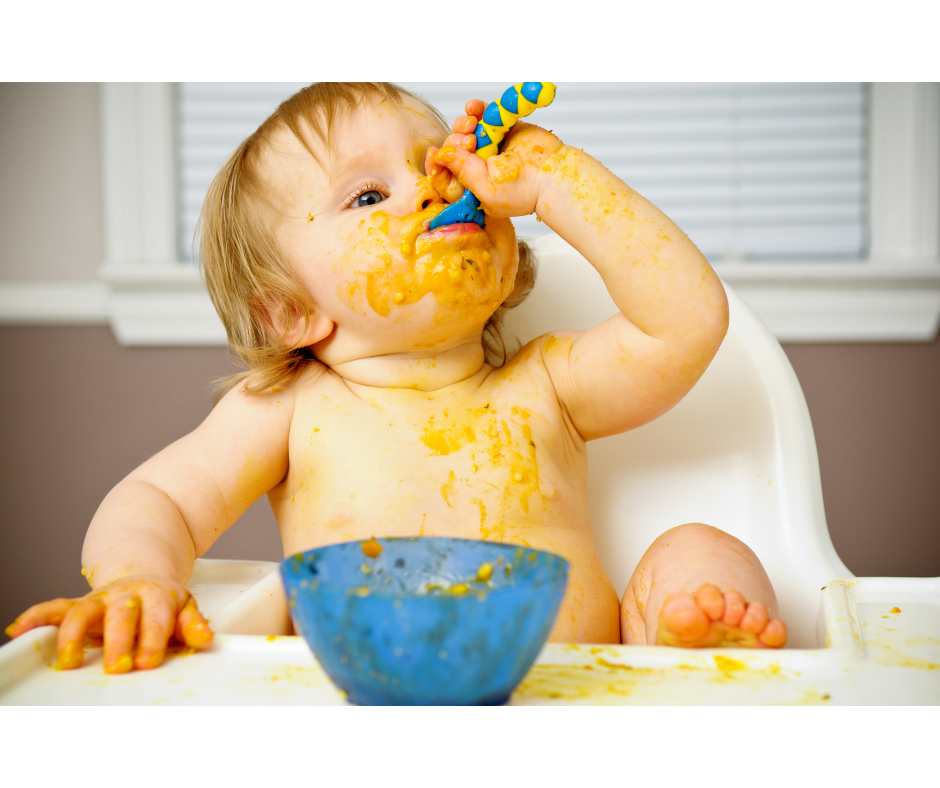
Focus: Early chewing
We expect children to:
Eat soft table foods
Use fingers to self-feed in a pincer grasp
Move food side to side in mouth
Begin chewing with back gums
Drink from a straw or open cup (with help)
This is when chewing skills really start developing.
9 – 12 Months
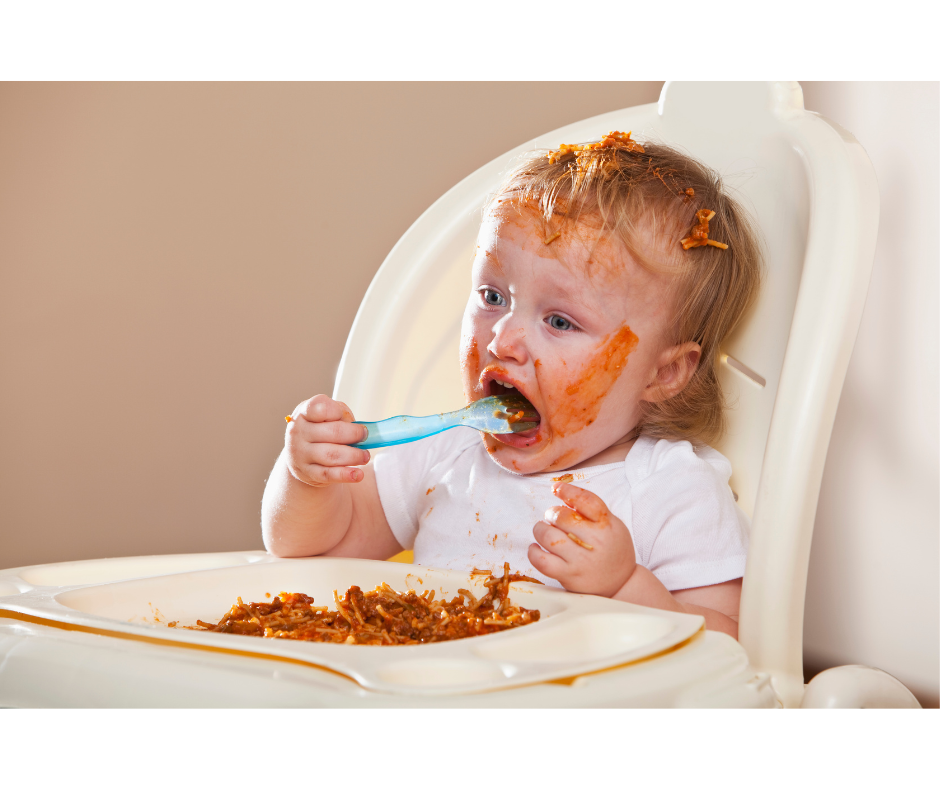
Focus: Expanding textures and independence
We expect children to:
Eat a variety of soft solids
Bite through foods like soft fruits or pasta
Use a spoon with help
Show food preferences
Eat most family foods (with modifications)
Some picky behavior is common — but children should still accept foods from multiple food groups.
12 – 18 Months
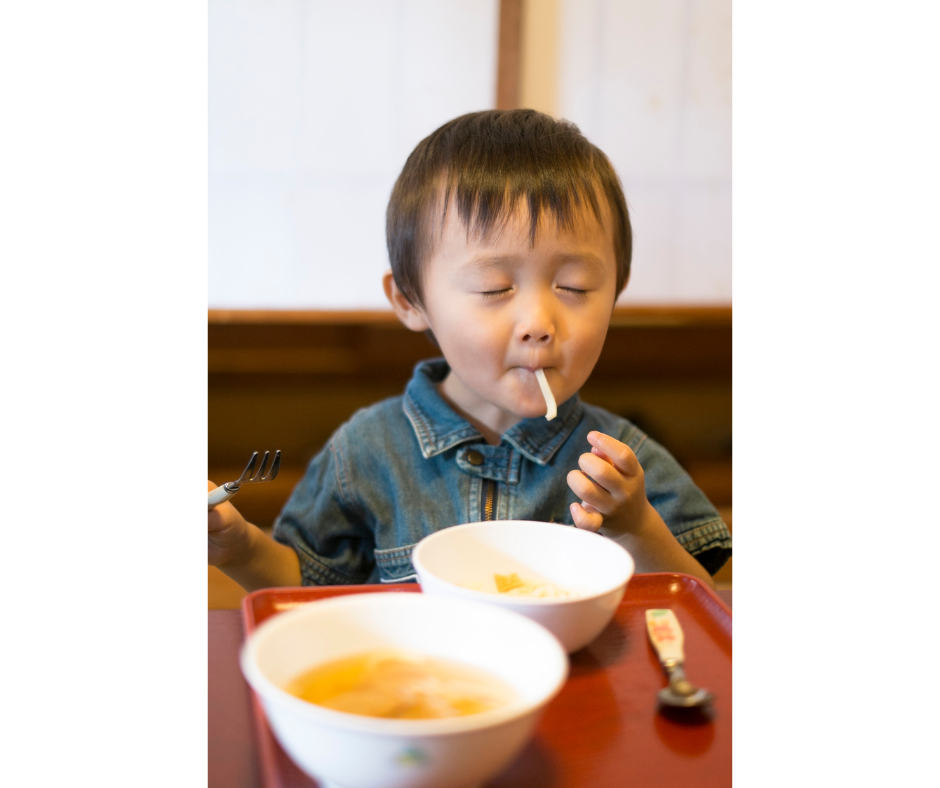
Focus: Improving chewing and self-feeding
We expect children to:
Chew more efficiently
Handle mixed textures
Use utensils with growing skill
Drink from open cups
Sit at the table for short meals
18 – 24 Months
2 – 3 Years

Focus: Refining skills
We expect children to:
Eat most textures
Bite and chew meats (with support)
Use spoon and fork
Manage small bites
Tolerate foods touching on their plates, or mixed together. For instance: pasta with sauce, beans and rice, soups, chicken and vegetables
What’s Typical vs. Concerning?
Some picky eating is normal. Many toddlers go through phases.
But feeding may need extra support if your child:
Eats fewer than ~20 foods
Drops foods and doesn’t replace them (ex: used to eat strawberries, now won’t at all)
Gags, coughs, chokes, or loses food or liquid from mouth frequently
Avoids entire textures (all solids, all crunchy foods, etc.)
Not drinking from a straw
Struggles to chew meats
Has high stress at meals, or tantrums around food
High sensitivity to food smells
Still relies mostly on purées after 12–15 months
Drinks more than 16oz of milk per day
Takes a long time to eat a full meal
Remember
Milestones are guides, not grades.
Some children need more time, more practice, or different support due to:
Sensory differences
Motor challenges
Medical history
Neurodivergence
Prematurity
If feeding feels hard, help is available. Early support can make a big difference.
When to Reach Out
Consider a feeding evaluation if you feel worried, stuck, or stressed about meals, even if your child is close to these milestones.
You know your child best.